Roblox climbing games cover more than one kind of ascent. Some focus on a demanding mountain obstacle course; others frame the journey as a summit expedition or a wider snowy adventure. Start with the kind of movement and session your group wants, then choose the experience.
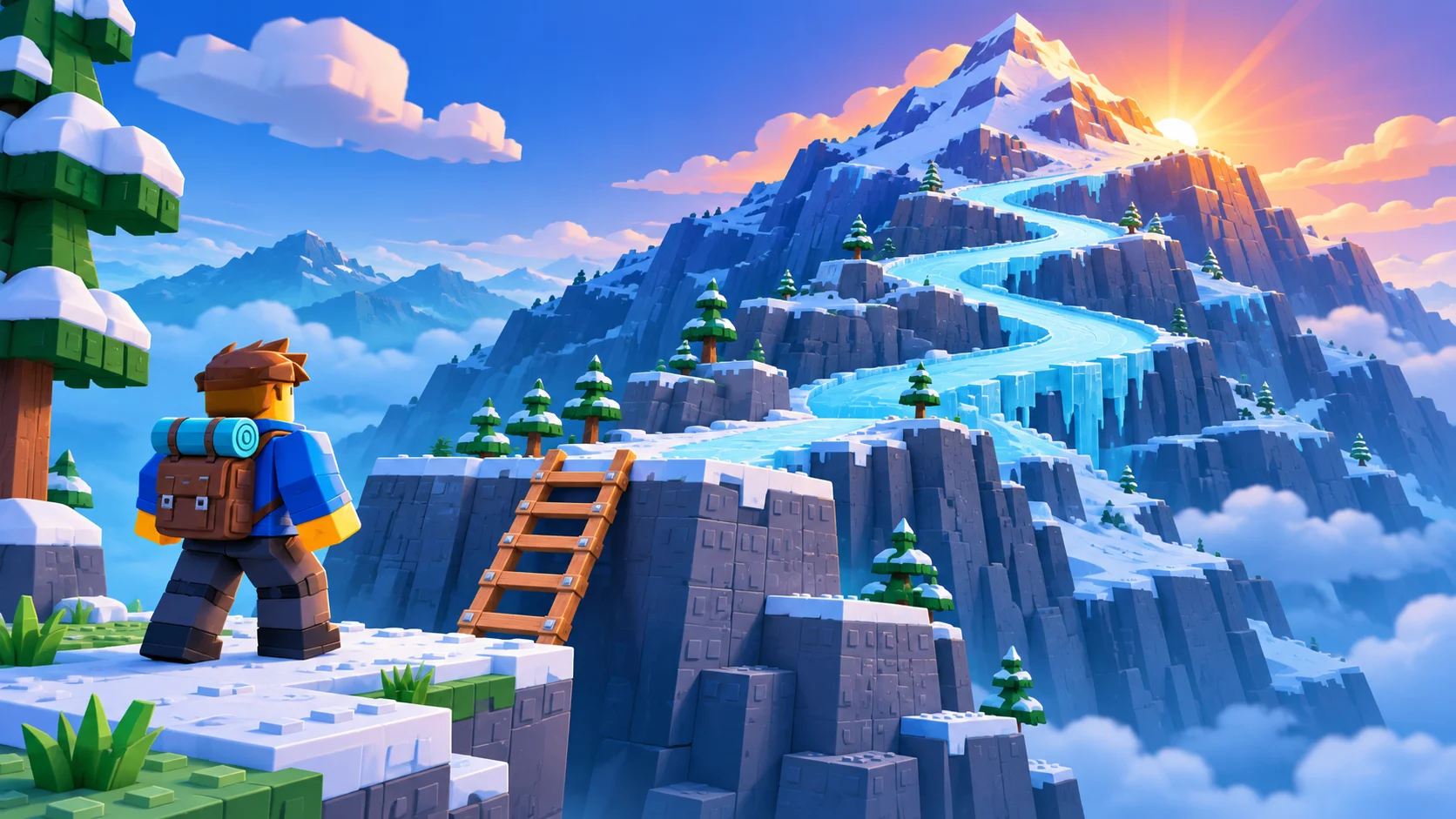
These three picks are organized by their current creator listings, checked November 8, 2026. They are not a hands-on ranking. The comparisons below separate what the listing describes from practical suggestions for choosing a session.
Choose a climbing format first
| Experience and creator | Listing emphasis | Consider it when |
|---|---|---|
| STEEP STEPS — steep steps | Demanding mountain ascent | Your group wants to work through a hard course together |
| Mt. Everest Climbing Roleplay — Everest Games Holding | Summit challenge and mountain roleplay | You want a named mountain objective with camp milestones |
| Expedition Antarctica — Playduo Studio | Snowy expedition toward the South Pole | You prefer a journey across different terrain, solo or with friends |
A mountain theme does not tell you the whole control scheme. If you specifically want hand-over-hand rock climbing, check the current controls and opening tutorial before committing to a long session. An expedition, an obby, and a dedicated climbing mechanic can all use similar scenery while asking different things of the player.
STEEP STEPS: choose a demanding mountain course
The official STEEP STEPS listing, by steep steps, presents the experience as a difficult mountain climb and suggests experiencing it with friends. That makes it the most direct match in this shortlist for a group specifically looking for a hard ascent.
Decide how your group wants to handle a failed attempt before you start. Will everyone wait and regroup, or will faster players continue? That small agreement can matter more than choosing a game with the tallest-looking mountain. A shared objective is easier to enjoy when everyone understands what happens after someone falls behind.
Use the opening section to judge the kind of challenge you enjoy. Notice whether you want to keep practicing the same movement or would rather explore new scenery. This is a suggested way to assess the session, not a claim about a tested difficulty curve or a guaranteed completion time.
Mt. Everest Climbing Roleplay: choose a summit objective
The current Mt. Everest Climbing Roleplay listing is by Everest Games Holding. Its description frames the climb as an extreme summit challenge, and its visible badges include camp milestones. Choose this direction if the idea of progressing toward a recognizable mountain summit appeals to you.
Use intermediate goals to plan your session. Reaching a camp and deciding whether to continue is a different social plan from insisting that everyone must finish the full climb in one sitting. The visible milestone structure gives you something concrete to discuss without inventing an exact session length.
Check the creator as well as the title. Roblox search contains similarly named mountain experiences, so a familiar name alone does not identify this specific listing. The direct link above points to place ID 3145447020; it is separate from other Everest-named pages.
Expedition Antarctica: choose a wider snowy journey
The Expedition Antarctica listing, by Playduo Studio, describes a solo or group adventure toward the South Pole, including glaciers, icebergs, and mountains. It belongs in this comparison as an expedition option rather than a promise of a pure vertical climbing simulator.
Consider it when your group wants an overall destination and changing terrain to discuss along the way. Agree on whether you are trying to reach the destination or simply exploring together. Those are both valid plans, but they lead to different expectations when one person wants to stop and another wants to push forward.
If you arrived looking only for a compact obstacle course, compare the broader expedition premise with STEEP STEPS before choosing. The useful distinction is the session you want to have, rather than an unsupported claim that one experience is universally better.
Make a small plan before joining friends
- Choose the same listing. Share its direct link and check the displayed creator.
- Check current access. Read the experience page’s age, device, and availability information for each player.
- Pick a first goal. Agree on an early milestone or a short trial instead of assuming a full completion.
- Agree on regrouping. Decide what the group does if someone needs another attempt.
- Review the session. Continue only if the movement and pace suit the people playing.
These are session-planning suggestions. They do not establish private-server availability, supported controllers, save behavior, or cross-device performance for a specific experience. Verify those details in the current game when they matter to your group.
Compare the route, the recovery, and the social rules
When choosing a climbing game, ask three separate questions. Can you understand where the route goes? What happens when you miss a movement? How does another player’s progress affect your own plan? A dramatic mountain image cannot answer all three.
You can use the same questions to describe why a session worked. Perhaps the route was readable, the next goal was clear, or the group enjoyed waiting and helping. Those observations are more useful than calling every difficult game unfair or every easy one boring.
For a different kind of cooperation, compare Roblox puzzle games. For a wider set of platforming formats, continue with the obby-games guide.
Turn an ascent idea into an original prototype
If you are building your own climbing-themed experience, start with one readable route, one recovery rule, and one visible goal. Sketch how a player understands the next move before adding a larger mountain or more scenery.
The obby course planner can help organize an initial course concept. Then use the Studio obby tutorial for a building workflow. A planned route still needs implementation and playtesting; it is not evidence of a working climbing controller or multiplayer recovery system.
Create your own geometry, presentation, and rules. Study the difference between a precision course and an expedition without copying another creator’s map, branding, or assets. A small original route you can test is a more useful first milestone than a large unverified promise.